I know exactly what you're thinking: "Some people just float, and I'm not one of them."
You're half right. Some people float more easily than others. But almost every adult who tells me they "can't float" actually can — they've just never been taught the one thing that makes it work. Floating isn't a talent you're born with. It's a skill, and it's the single most important one in swimming.
Let's fix it.
Why your hips sink
Here's the physics, and it's the whole game. Your lungs are the most buoyant thing in your body — a big air-filled balloon in your chest. Your hips and legs are dense muscle and bone, and they want to sink.
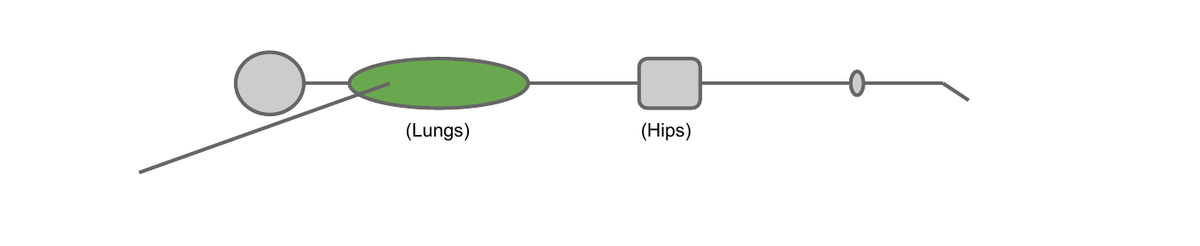
So when you lie back in the water and relax, two things happen at once: your chest floats up, and your hips drop down. You end up at an angle, feet heading for the bottom, and the instinct is to panic and stand up.
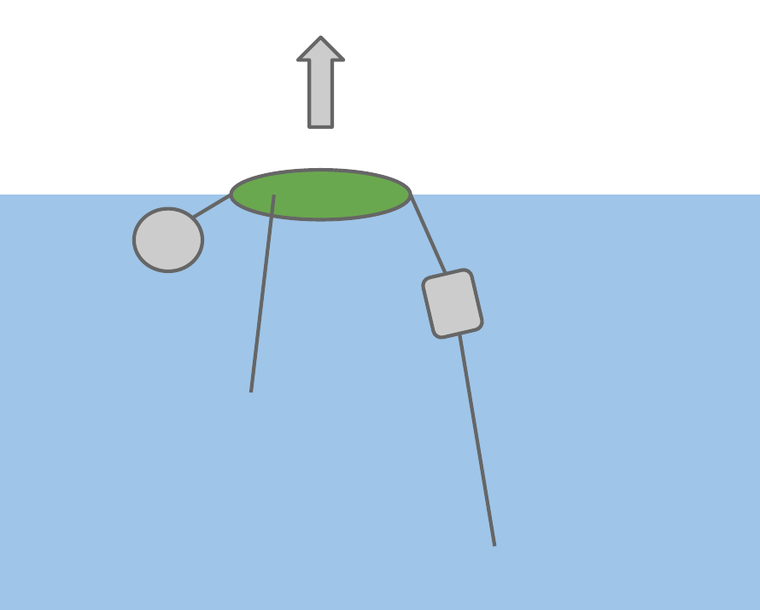
That's not a flaw in you. That's just what an un-coached body does in the water. The fix isn't to kick harder or "try to relax" — it's to teach your body to balance those two forces so your hips ride up near the surface where they belong.
The one move that changes everything
The secret is counterintuitive: to lift your hips, you press your chest down.
Your chest is the buoyant part. When you press it gently into the water, the seesaw tips — your hips rotate up toward the surface. It feels backwards the first few times. Press down to rise up. But once your body finds it, floating stops being a fight.
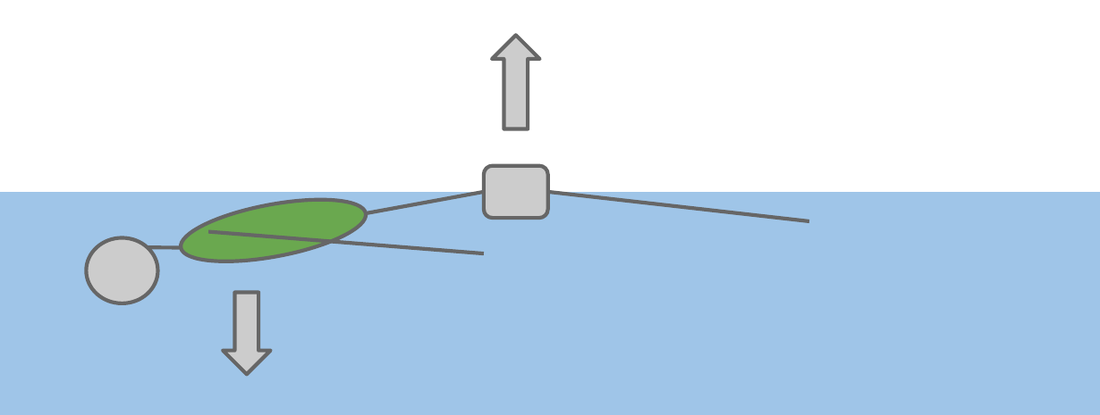
This is the same principle behind every stroke in swimming. Get your hips up, and suddenly freestyle, backstroke, all of it gets dramatically easier, because you're no longer dragging your lower half through the water like an anchor.
How to practice it (shallow end, 15 minutes)
You don't need deep water or any equipment. You need a wall and a little patience.
- —Wall-assisted back float. Stand in shallow water with your back to the wall. Put your heels against the base of the wall, lean back, and let your head rest in the water — ears under, face up. Take a big breath and hold it. Notice how much higher you float with full lungs. That's your buoyancy doing the work.
- —Find the balance point. Keep your chest gently pressing up-and-back into the water and let your hips rise toward the surface. Don't muscle it. Small adjustments. Breathe slowly — every time you exhale fully, you'll feel yourself sink a little, which teaches you exactly how much air you're carrying.
- —Front float with the wall. Roll over. Hold the wall or gutter, take a breath, put your face in, and press your chest down. Let your hips and legs float up behind you. The goal is a flat, horizontal body line — not a downward slope.
- —Let go for one second. Once the wall-assisted version feels stable, push off gently and hold the float on your own for a single second. Then two. Then five. You are not trying to swim. You're teaching your body one thing: I can stay on the surface.
Here's the wall-assisted back float — your starting point:
And the same idea face-down, on your stomach:
Do this 15 minutes a session, a few sessions, and something clicks. It's exactly like the moment you stopped falling off a bike — once your body learns the balance, it never really forgets it.
What not to do
- —Don't hold your breath in a panic. A relaxed, full breath floats you. A clenched, frozen body sinks. Breathe slowly the whole time.
- —Don't kick to stay up. Kicking masks the problem. The whole point is to float without kicking, so your body learns real balance instead of compensating.
- —Don't rush to "real swimming." Floating and balance are the foundation. Skip them and every stroke you learn later will be built on sand.
The bottom line
If you sink, you don't need to be stronger or fitter. You need to teach your body to balance its buoyant chest against its heavy hips — and that's a learnable skill, at any age, starting in the shallow end with a wall and a few quiet minutes.
This is the first thing we install in every adult who walks onto our deck, and it's the foundation of our whole Learn-to-Swim program. We don't start with arms. We start here.
Happy swimming, Coach Sean
Want to do this with a coach?
Reading is a start — but a coach watching you in the water is how it actually clicks. Our Learn-to-Swim program is private, 1-on-1, at the Gallaudet University pool in DC.